Classic Pan-Seared Pekin Duck Breast
The essential technique for perfectly crispy-skinned duck breast, finished with a simple red wine pan sauce. A foundational recipe that lets the quality of the duck speak for itself.
Ingredients
- 4 Crescent Duck boneless breasts, skin on
- 1 teaspoons Kosher salt
- 0.5 teaspoons Freshly ground black pepper
- 2 Shallots, minced
- 0.8 cups Dry red wine
- 0.5 cups Chicken or duck stock
- 1 tablespoons Unsalted butter, cold
- 1 teaspoons Fresh thyme leaves
Method
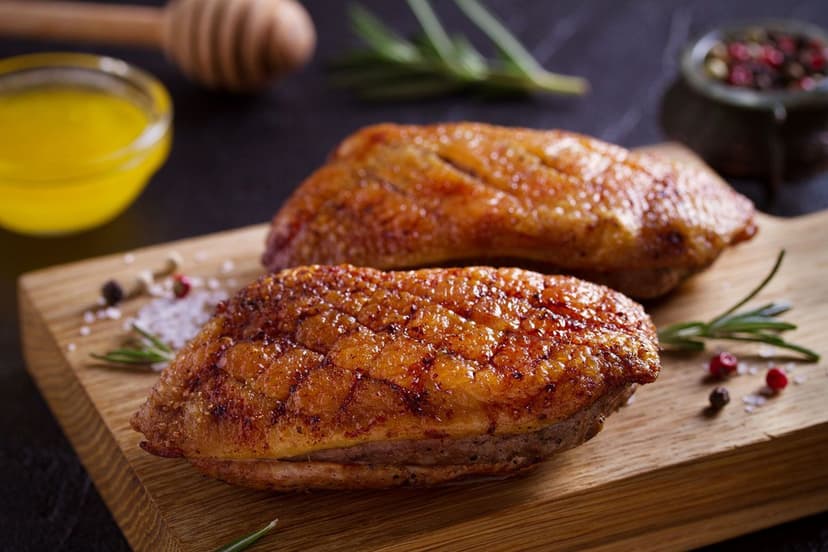
- Score the skin: Using a sharp knife, score the skin of each 4 Crescent Duck boneless breasts, skin on in a tight crosshatch pattern, cutting through the fat but not into the meat. Pat completely dry, then season both sides with 1 teaspoons Kosher salt and 0.5 teaspoons Freshly ground black pepper.
- Render the fat: Place breasts skin-side down in a cold, heavy skillet (no oil needed). Set over medium-low heat and let the fat render slowly, without moving the duck.
- Crisp the skin: Once the skin is deep golden and crisp and most of the fat has rendered, pour off the excess fat (reserve for another use). Increase heat to medium.
- Sear and rest: Flip the breasts and sear the flesh side for 5 minutes 05:00 for medium-rare. Transfer to a cutting board, tent with foil, and rest.
- Build the pan sauce: Pour off all but 1 tablespoon of fat from the skillet. Add 2 Shallots, minced and cook until softened, about 3 minutes 03:00. Add 0.8 cups Dry red wine and simmer, scraping up browned bits, until reduced by half.
- Finish the sauce: Add 0.5 cups Chicken or duck stock and simmer until slightly thickened. Off heat, whisk in 1 tablespoons Unsalted butter, cold until glossy. Stir in 1 teaspoons Fresh thyme leaves.
- Slice and serve: Slice each duck breast on the bias and fan over plates. Spoon the pan sauce over top and serve immediately.
Notes: The key to crispy skin is starting in a cold pan and rendering slowly - rushing the heat will toughen the skin before the fat has a chance to render out. Save the rendered duck fat; it's excellent for roasting potatoes or vegetables.